
One of the first questions businesses ask before investing in SEO is simple: how long does SEO take to work? Unlike paid advertising, where traffic can start almost immediately after a campaign goes live, SEO usually requires consistent work before meaningful organic growth becomes visible.
For most websites, SEO is a long-term process rather than a quick marketing tactic. Rankings can improve within a few weeks for some pages and keywords, while competitive terms may take several months or longer. The timeline depends on factors such as the website’s current authority, technical condition, competition, content quality, backlinks, search intent, industry, and the consistency of the SEO campaign.
A realistic SEO strategy also needs to look beyond rankings. Increased impressions, better keyword positions, organic traffic, qualified leads, and conversions are all important indicators of progress. Understanding how these results develop over time can help businesses set realistic expectations and evaluate whether their SEO campaign is moving in the right direction.
How Long Does SEO Take to Work?
There is no universal SEO timeline that applies to every website. A new website targeting highly competitive keywords will generally have a different growth path from an established website with years of content, backlinks, and brand recognition.
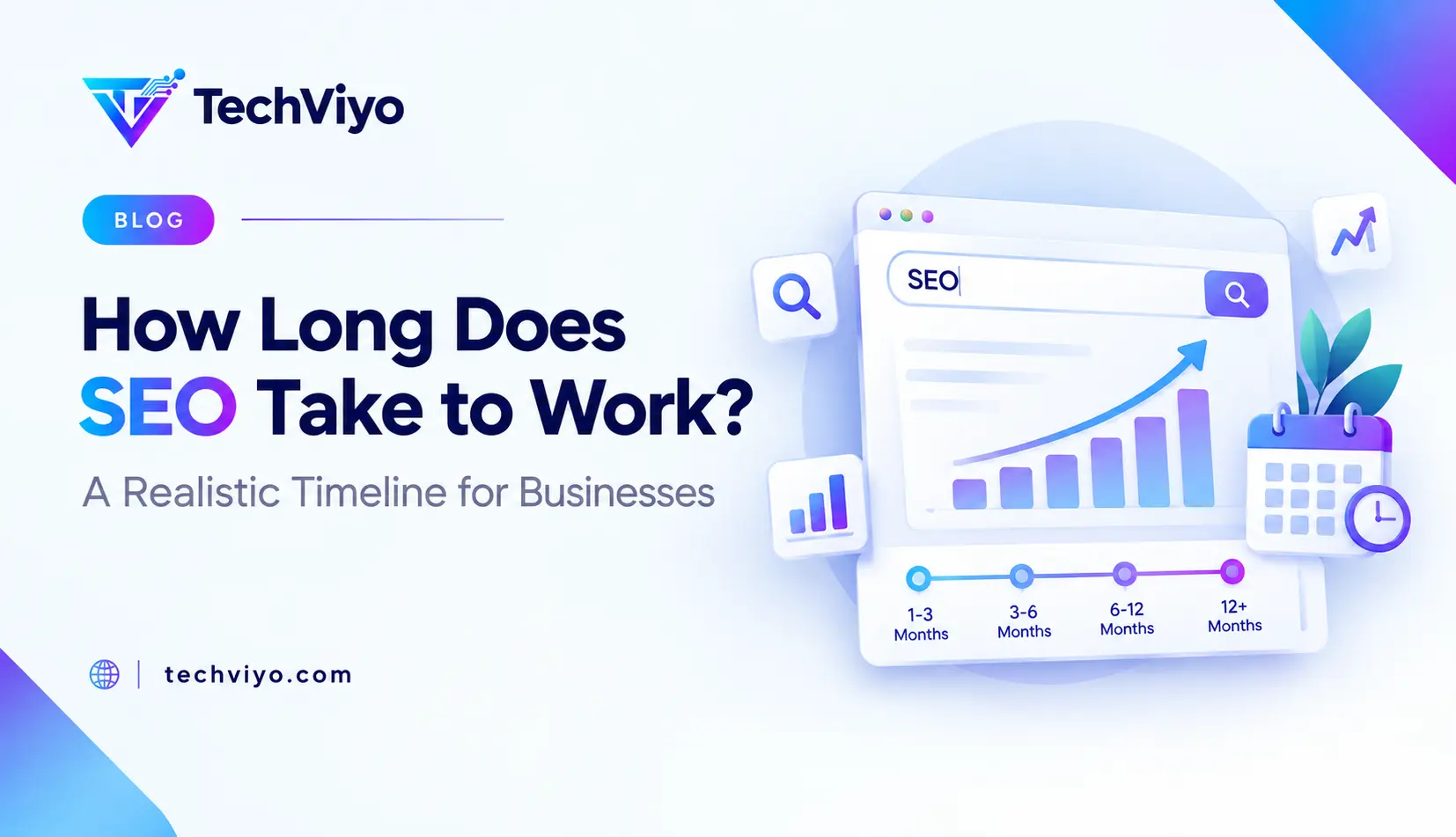
In many cases, businesses may begin noticing early SEO signals within the first 1–3 months, while more meaningful organic traffic and ranking improvements often develop over 3–6 months. Stronger results can take 6–12 months or longer, particularly in competitive industries.
These timeframes are not guarantees. SEO performance can move faster or slower depending on the website and market.
| SEO Stage | Typical Focus | What Businesses May See |
| 0–3 months | Audits, technical fixes, keyword research, content and on-page improvements | Improved crawling, indexing, impressions and early ranking movement |
| 3–6 months | Content expansion, internal linking, authority building and optimization | More keyword visibility and increasing organic traffic |
| 6–12 months | Scaling successful strategies and strengthening authority | Stronger rankings, traffic and potential lead growth |
| 12+ months | Continuous optimization and competitive growth | More stable organic visibility and opportunities to expand |
The important point is that SEO results usually develop progressively. A website does not necessarily go from zero traffic to major traffic overnight.
Why SEO Takes Time
Search engines need to understand, evaluate, and compare pages before deciding where they should appear for particular queries. SEO involves improving many signals at the same time, including technical accessibility, content relevance, site structure, internal links, authority, and user experience.
Competition is another major factor. Ranking for a specific service keyword requires more than simply including that keyword on a page. Search engines have to determine whether the page provides a useful answer and how it compares with other relevant pages already ranking.
For example, a local business targeting a specific service in a smaller market may have fewer competitors than a national company targeting a broad commercial keyword. The underlying SEO process is similar, but the amount of work required to compete can be very different.
This is why a good SEO campaign should be planned around the website and market rather than a fixed promise such as “you will rank in 30 days.”
SEO Timeline: What Happens in the First 3 Months?
The first few months of an SEO campaign are often focused on building the foundation.
Before expecting significant traffic growth, an SEO team may need to identify technical problems, understand the existing keyword landscape, review competitors, improve important pages, and establish a content strategy.
Month 1: Research, Auditing and Fixes
The first month usually begins with an SEO audit and website analysis. This can reveal problems affecting crawling, indexing, page speed, redirects, metadata, internal linking, duplicate content, canonicalization, structured data, and other technical areas.
Keyword research is also important at this stage. Instead of targeting keywords solely because they have high search volume, businesses need to identify queries that match their products, services, audience, and business goals.
Other early activities can include:
- Reviewing existing rankings and organic traffic
- Identifying technical SEO issues
- Mapping keywords to relevant pages
- Improving titles and meta descriptions
- Reviewing website structure and internal links
- Identifying content gaps
- Evaluating competitors
- Prioritizing high-value pages
Some websites can see early improvements after major technical problems are resolved, but this does not necessarily mean the entire SEO campaign has already produced its full results.
Month 2: Content and On-Page Optimization
Once the initial problems are addressed, the focus can move toward improving the website’s content and relevance.
Existing pages may need better search intent alignment, clearer information, stronger topical coverage, improved headings, internal links, FAQs, supporting content, and more useful information for visitors.
New content can also be published around relevant topics and customer questions. The objective is not to publish large amounts of content simply for the sake of publishing. Each page should have a clear purpose and contribute to the website’s overall topical coverage.
Month 3: Measuring Early SEO Signals
By the third month, businesses may have enough data to identify early trends.
The website might begin receiving more impressions for target and related queries, while some pages may move from lower positions toward the first page. Organic traffic may also begin increasing, although the level of growth varies considerably.
At this stage, SEO professionals should review what is actually working rather than blindly following the original plan.
For example, if one group of pages is generating impressions but not clicks, titles and descriptions may need improvement. If certain pages are ranking on page two, they may be good candidates for additional content, internal links, or authority-building efforts.
What Happens Between 3 and 6 Months?
The 3–6 month period is often when an SEO campaign starts generating more meaningful data.
By this point, multiple pages may be ranking for a wider range of keywords. Search engines have more information about the website, while the business has more performance data to determine which topics and pages deserve additional attention.
Content can be expanded based on real search performance. Pages ranking near the top can be optimized further, while pages that are receiving impressions but little traffic can be reviewed for search intent and click-through improvements.
Internal linking also becomes increasingly valuable. Supporting articles can link to important service or category pages, helping users navigate the website while strengthening the relationship between related topics.
Off-page SEO and authority-building activities can also contribute to long-term growth when they are relevant and earned through legitimate strategies.
What Happens After 6 Months?
After six months, an SEO campaign should generally have enough historical data to make more informed strategic decisions.
This does not mean every keyword will rank on page one. Instead, the business should be able to identify patterns in its organic performance.
Some pages may become strong traffic sources. Others may need significant improvements. Certain keywords may prove too competitive, while related long-tail queries may provide better opportunities.
At this stage, SEO becomes increasingly iterative:
Create → measure → improve → expand → measure again.
Successful campaigns continue optimizing rather than treating SEO as a one-time project.
What Factors Affect How Long SEO Takes?
The answer to how long does SEO take depends heavily on the starting point and competitive environment.
Website Age and Existing Authority
An established website may already have backlinks, indexed pages, branded searches, historical content, and some level of search authority. A brand-new domain generally needs more time to build these foundations.
However, website age alone does not determine SEO success. An older website with poor technical SEO and weak content can still struggle against a newer website with stronger relevance and authority.
Keyword Competition
Keyword difficulty has a direct effect on the SEO timeline.
A specific long-tail query can sometimes be easier to target than a broad commercial keyword. For example, a highly specific service query may have a smaller competitive landscape than a generic term such as “digital marketing.”
Businesses should therefore evaluate keywords based on relevance, competition, search intent, and business value, not search volume alone.
Website Technical Health
Technical problems can slow SEO progress if search engines have difficulty crawling, rendering, indexing, or understanding important pages.
Common issues include:
- Poor internal linking
- Duplicate or thin pages
- Incorrect canonical tags
- Indexing problems
- Slow page performance
- Broken links
- Poor mobile usability
- Incorrect redirects
- Poor site architecture
Fixing these issues can create a stronger foundation for the rest of the SEO campaign.
Content Quality and Topical Coverage
Publishing one article around a keyword is rarely enough to establish strong topical relevance in a competitive market.
A website may need a collection of related pages covering different aspects of a subject. These pages can support one another through internal links and provide more complete coverage of the audience’s questions.
The goal should be useful, original content that satisfies search intent rather than simply increasing the number of pages on a website.
Backlinks and Website Authority
Links from relevant and credible websites can help strengthen a site’s authority, particularly when competing against established websites.
However, acquiring large numbers of low-quality links simply to manipulate rankings can create problems. A sustainable SEO campaign should prioritize relevance, quality, and legitimate authority-building opportunities.
Industry and Location
SEO timelines vary significantly between industries and locations.
A local business targeting a specific city may have a very different competitive environment from an international ecommerce company competing across multiple countries.
Local SEO can also involve factors beyond traditional website rankings, including Google Business Profile optimization, local relevance, citations, reviews, and location-specific content.
Can SEO Results Happen Faster?
Yes, but faster results usually depend on the website’s existing position and the opportunity being targeted.
An established website that already ranks on the second page for a relevant keyword may be able to improve that ranking faster than a new website starting from zero.
Similarly, fixing a major technical issue can sometimes produce noticeable improvements relatively quickly. Updating outdated content can also generate faster movement when the page already has authority and search visibility.
This is different from promising guaranteed rankings within a specific number of days.
A realistic SEO campaign identifies opportunities where improvements are possible and then measures whether those changes produce positive results.
Why Some SEO Campaigns Take Longer Than Expected
Not every SEO campaign follows a smooth upward line.
Rankings can fluctuate as search engines reassess pages, competitors publish new content, search behavior changes, and websites are updated. A page can also gain visibility for several related keywords while losing a position for another query.
Another common problem is changing strategy too frequently. SEO requires enough time and data to determine whether an approach is working. Constantly changing keywords, pages, content strategies, or link-building approaches can make performance harder to evaluate.
Businesses should therefore look at broader trends instead of judging an SEO campaign based on one keyword on one day.
How to Measure SEO Results
Rankings are useful, but they should not be the only measurement of SEO performance.
A business should track several metrics to understand whether organic search is contributing to its goals.
Organic Impressions
Impressions show how often pages appear in search results. Increasing impressions can indicate that the website is gaining visibility even before significant traffic growth occurs.
Keyword Rankings
Tracking target keywords helps businesses understand whether their pages are moving toward more competitive positions.
However, rankings should be analyzed across groups of keywords rather than focusing on one term.
Organic Traffic
Organic traffic shows whether increased search visibility is translating into visits.
It is important to look at traffic quality as well. A large increase in visitors is not necessarily valuable if those visitors have no connection to the business’s products or services.
Leads and Conversions
For commercial websites, leads, sales, calls, form submissions, bookings, and other conversions can be more meaningful than traffic alone.
A successful SEO campaign should ultimately connect search visibility with business objectives.
SEO vs Paid Advertising: Why the Timeline Is Different
SEO and paid advertising work differently. Paid advertising can put a business in front of potential customers soon after campaigns are launched and budgets are allocated. SEO generally requires time to build organic visibility.
That does not make one universally suitable for every business. They serve different marketing purposes.
Some businesses use paid campaigns to generate immediate traffic while building organic visibility through SEO. Others prioritize SEO because they want to develop a long-term acquisition channel.
The right approach depends on budget, competition, business goals, customer journey, and how quickly the business needs results.
How to Create a Realistic SEO Campaign Timeline
A useful SEO timeline should be based on the actual website rather than an arbitrary number of months.
A typical campaign can be organized into several stages:
Stage 1 — Foundation:
Technical audit, keyword research, competitor analysis, website structure, indexing and priority fixes.
Stage 2 — Optimization:
On-page SEO, content improvements, internal linking, technical refinements, and optimization of important commercial pages.
Stage 3 — Growth:
Content expansion, authority building, local or ecommerce SEO where relevant, and continuous optimization based on performance data.
Stage 4 — Scaling:
Expanding successful topic clusters, improving high-potential pages, targeting new keyword opportunities, and strengthening organic conversions.
This approach makes an SEO campaign easier to manage because every stage has a purpose and measurable indicators.
What Businesses Should Expect From an SEO Agency
When working with an SEO agency, businesses should expect transparency about the work being performed and the metrics being tracked.
An agency should be able to explain what is being optimized, why certain keywords are being targeted, how technical issues are being handled, and how progress will be measured.
Businesses should also be cautious about guaranteed ranking claims. Search engines use complex systems that no SEO provider directly controls, so exact ranking positions and timelines cannot be guaranteed.
A professional SEO campaign should instead focus on improving the website’s technical health, relevance, content quality, authority, visibility, and ability to convert organic visitors.
Frequently Asked Questions
How long does SEO take to show results?
Early improvements can sometimes appear within the first few months, particularly when a website has clear technical or content issues that can be fixed. More meaningful organic growth commonly takes several months, while competitive markets may require six months, twelve months, or longer.
Can SEO work in one month?
SEO improvements can occur within one month, especially after technical problems are fixed or existing pages are optimized. However, one month is generally too short to judge the full performance of an SEO campaign, particularly for a new website or highly competitive keywords.
How long does it take to rank on Google?
There is no fixed timeframe for ranking on Google. A page’s timeline depends on competition, relevance, authority, technical health, content quality, search intent, and the strength of competing pages.
Why is my website not ranking after three months of SEO?
Several factors could be responsible, including technical problems, weak content, incorrect search intent, highly competitive keywords, insufficient authority, poor internal linking, or an SEO strategy that has not been implemented consistently. Performance data should be reviewed before deciding what needs to change.
Does SEO get better over time?
SEO can become more effective over time as a website builds useful content, authority, internal links, backlinks, historical performance data, and brand visibility. However, growth is not automatic. Websites still need ongoing optimization and updates.
How long should a business invest in SEO?
SEO is generally more effective when treated as an ongoing marketing channel rather than a short-term campaign. The appropriate investment period depends on competition, business goals, website condition, budget, and the value of organic search to the business.
Final Thoughts: SEO Is a Process, Not a Countdown
So, how long does SEO take? There is no single number that applies to every business. Early signals may appear within the first few months, while substantial organic growth can take six months, twelve months, or longer depending on the competitive environment and the quality and consistency of the SEO campaign.
The most useful way to evaluate SEO is to look at progress over time. Increasing impressions, improved keyword visibility, growing organic traffic, stronger pages, and ultimately more qualified leads or conversions provide a much clearer picture than checking one keyword every day.
Businesses that approach SEO with realistic expectations can make better decisions about their investment and strategy. Rather than asking only when SEO will “work,” it is more useful to ask what is improving, what still needs attention, and whether organic search is moving the business toward its goals.
 October 5, 2026WordPress vs Custom Website Development: Which Should You Choose?Read article →
 October 3, 2026How to Optimize Your Website for Google AI Overviews and AI SearchRead article →